Showing posts with label Resources. Show all posts

Friday, May 18, 2012

Environment & Society Portal

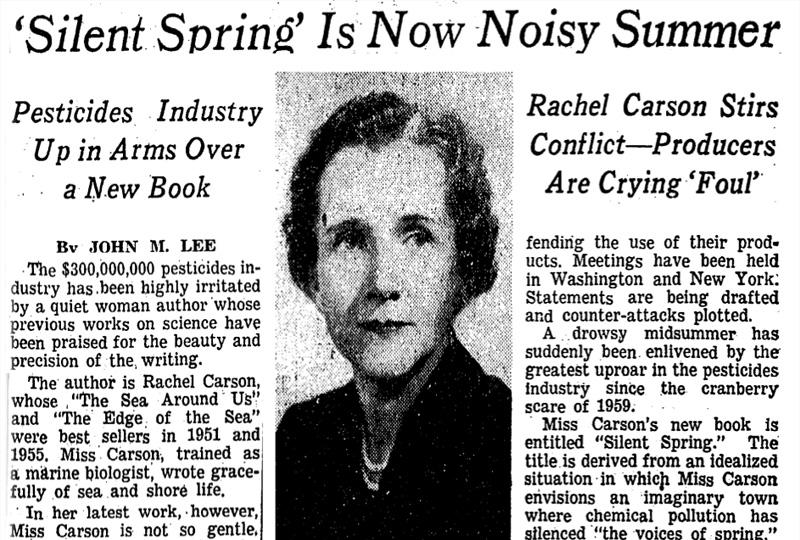
If you're on the H-Environment listserv, you probably saw the recent announcement about the Environment & Society Portal's exhibit on Rachel Carson's Silent Spring. It is a beautiful exhibit, and it inspired me to finally take some time to explore the rest of the portal. All I can say is: wow. This is an incredible resource for teaching. 

Even if environmental history is not one of your primary interests, please check this site out. Many connections with the history of science, medicine, and technology are visible on the site, making it easy to imagine how to integrate some environmental history into a history of science class, and vice versa. 
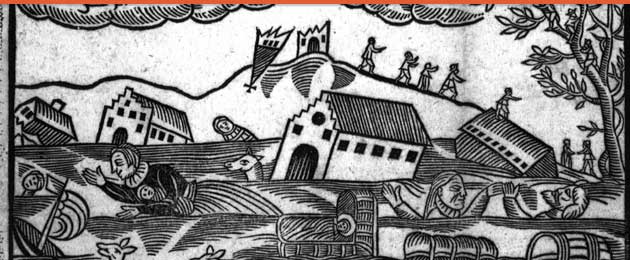
Woodcut from broadsheet: "The Great and Terrible Flood,"
January 1651, from the Portal's Multimedia Library for
environmental humanities

As more exhibits go up and more multimedia are added, I think it's going to be an exciting place to get ideas and materials for teaching. The three navigation tools––map viewer, timeline, and keyword explorer––make it easy to make new and interesting connections across time and space. Just looking at this site has made me daydream about designing my own global environmental history class. 

Anyway, I thought I would share this, since I'm not sure whether other HSM&T folks are aware of it. If you have found other websites useful for teaching (or ones you want to use in the future), or if you have specific ideas about how best to use a resource like this in the classroom, please share them in the comments! I'd love to have an ongoing discussion about this (happy hour, anyone?), but it would be nice to collect links here, as well. 
The Keyword Explorer links to articles
and multimedia throughout the Portal

Thursday, October 13, 2011

Encyclopedia of Historians and Historical Writing


As the history of science has moved beyond strict intellectual history, our work has gotten more and more interdisciplinary. At the same time, because we are in one of the few independent history of science departments in the country, even our colleagues on the other side of Bascom Hill can sometimes seem like they're from another world. When beginning work on a new project, you inevitably realize that other subdisciplines of history likely have valuable contributions to offer. But catching up on decades of historiography in a field that impinges on your work takes time and hard work. And especially for those of us who come from backgrounds other than history, figuring out how to start can be bewildering.

Probably the most important thing to do is ask a friend in the "regular ol' " History Department for suggestions about what to read and who to talk to. Syllabi and textbooks from survey courses can also point you in the right direction.

I just stumbled upon a useful source, though, that can help make tracking down and understanding unfamiliar historiographies just a little bit easier: The Encyclopedia of Historians and Historical Writing. Trying to decide whether it's more correct to say that your work will be relevant to "diplomatic historians" or to "historians of international relations"? Want to know who the most important authors in legal history are? Wonder what the heck Arnold Toynbee argued, anyway? This is the place to go.

Now, I obviously haven't read the whole thing, so I can't say whether every article is spot-on, but this is definitely a resource to add to your toolkit when venturing into new areas of history (especially if you find yourself suspicious of Wikipedia's handling of the topic). Unfortunately, our library system does not have it in electronic form, and only part of Volume 1 is available at Google Books.

While we're on the subject, how have you approached the problem of familiarizing yourself with relevant historical subdisciplines? Any tips to share or frustrations to vent?

(P.S. I'm hoping we can get more vigorous discussion going in the comments section of this blog, though maybe the low volume is just a result of the quality of our brownbag and happy hour conversations!)

Friday, October 7, 2011

Historical Methods & Resources For the Greenhorn Historian


Dear HSMTers (and their fans),

I have compiled a list of all the books and resources that I have found to be particularly helpful for learning historical methods and teaching. I also included a section on managing the lifestyle of being a graduate student and budding scholar. These resources may be a little basic, but they might be helpful for those with little or no historical or pedagogical training.


Books:

Becker, Howard Saul, and Pamela Richards. Writing for Social Scientists : How to Start and Finish Your Thesis, Book, or Article. 2nd ed, Chicago Guides to Writing, Editing, and Publishing. Chicago: University of Chicago Press, 2007.

Booth, Wayne C., Gregory G. Colomb, and Joseph M. Williams. The Craft of Research. 3rd ed, Chicago Guides to Writing, Editing, and Publishing. Chicago: University of Chicago Press, 2008.

Chandler, James, Arnold I. Davidson, and Harry D. Harootunian. Questions of Evidence : Proof, Practice, and Persuasion across the Disciplines. Chicago: University of Chicago Press, 1994.

Davidson, James West, and Mark H. Lytle. After the Fact : The Art of Historical Detection. 2 vols. New York: Knopf, 1982.

Grafton, Anthony. The Footnote : A Curious History. [Rev. ed. Cambridge, Mass.: Harvard University Press, 1997.

Jordanova, L.J., and LJ Jordanova. History in Practice: Arnold London, 2000.

Murray, Rowena. "Writing for Academic Journals." Maidenhead: McGraw-Hill International (UK) Ltd, 2009.

Rampolla, Mary Lynn. A Pocket Guide to Writing in History. 6th ed. Boston: Bedford/St. Martin's, 2010.

Rosen, Leonard J. The Academic Writer's Handbook. 3rd ed. Boston: Pearson Longman, 2012.

Tosh, John. The Pursuit of History : Aims, Methods and New Directions in the Study of Modern History. 5th ed. Harlow, England ; New York: Longman, 2010.

Turabian, Kate L., John Grossman, and Alice Bennett. A Manual for Writers of Term Papers, Theses, and Dissertations. 6th ed, Chicago Guides to Writing, Editing, and Publishing. Chicago: University of Chicago Press, 1996.


Research:

Perspectives on History: Finding the Story

On Taking Notes

Managing the Terror

How Writing Leads to Thinking (And not the other way around)

"Building a Mystery":Alternative Research Writing and the Academic Act of Seeking

Web 2.0 A Useful Tool for the History of Medicine (and Science and Technology...)


Digital Resources:

UW Database Library: History of Science, Medicine, Technology

Directory of History Journals

University of Wisconsin Digital Collections Center

Archival Resources in Wisconsin: Descriptive Finding Aids

The Knight Digital Media Center and Source Guides

Wisconsin Division for Libraries, Technology, and Community Learning: BadgerLink


Historical 'Hardware':

Transcriptions: Transcribing Audio to Text Software Aid (for Mac only)

Chicago Manual of Style Crib Sheet

RefWorks/EndNote/Zotero Features Comparison

All Bookstores Search Engine

Internet Disablers

Mac Applications Disabler

Desktop Screen Darkener


Free Trainings & Workshops:

Library Workshops: Historical Research

Library Workshops: Graduate Support Series

Library and Information Literacy Instruction

Writing Center Workshops

Software Training Workshops by DoIT


For Inspiration:

Why Become a Historian?

Why Study History?

Why the Past Matters

Advice Against Despair: Caring for the Whole ... and for Ourselves:


Professional Development:

Campus Humanities Portal

Grad School Survival

Scholarly Pursuits: A Guide to Professional Development During the Graduate Years

Publishing Without Perishing: A Handbook for Graduate and Professional Students

Graduate Student Professional Development Career Planning

The Professor Is In

Careers for History Majors

How to Find a Job Outside of Academia, Even if You Aren't Sure That You Want One