Thursday, June 7, 2012

Transit of Venus

Although we did not travel to Tahiti, several graduate students and faculty members did gather on the shore of Lake Mendota this Tuesday to try and observe the Transit of Venus. Venus passes in front of the sun periodically, with pairs of transits 8 years apart occurring approximately every 120 years. The most recent transit was in 2004, which meant this was the last opportunity in our lifetimes to witness it.

Aside from being a rare astronomical phenomenon, the Transit of Venus is significant for historical reasons. By combining precise observations of the Transit from multiple sites around the Earth, astronomers in the 17th and 18th centuries hoped to use the principle of parallax to calculate the distance between Venus and the Earth. If this distance could be determined, then the distances of all the planets from the Sun could be calculated using Kepler's law relating the period of a planet's orbit to its distance from the sun [video]. That is to say, scientists would finally know the absolute size of the solar system.

Scientists and explorers from Europe and America mounted expeditions to the far corners of the world to observe the transits of 1761 and 1769. This included the famous first voyage of James Cook, who set out from England to sail around South America at Cape Horn before heading on to the island of Tahiti in the South Pacific. After 8 months at sea, Cook and the scientific observers reached Tahiti and established a small observation post. After successfully recording their data, Cook and his crew continued on to explore the coasts of New Zealand and Australia before gradually making their way through the Indies and around the Cape of Good Hope on their way back to England.

Here in Madison, Mike, Florence, and Robin set up two telescopes at the Memorial Union Terrace. However the weather was mostly cloudy as the transit began. A dinner of beer, bratwurst, and sauerkraut helped our intrepid scholars ward off scurvy while waiting for the clouds to part.
20120605-30
Finally, about an hour into the transit, we began to see gaps in the clouds and sunlight breaking through in the west. As the sun came into view Mike and Florence quickly re-calibrated the telescopes.
20120605-37
One telescope had a solar filter that allowed viewers to look directly at the Sun and Venus, while the second telescope projected the image of the transit onto a sheet of paper.
20120605-53
20120605-69
As the clouds came and went, we attracted crowds of interested passers-by. People were grateful to have a chance to view the transit, and we all had a blast!

Click here for a full slideshow of the event.

Friday, June 1, 2012

A Thin Sheet of Reality: The Holographic Principle at the World Science Festival 2011


“What you’re seeing here is an interesting thing…This whole holographic story is the most radical thing that has happened to our understanding of space, time, matter, since the invention of quantum mechanics and relativity.” —Leonard Susskind

This weekend is the 5th annual World Science Festival in New York, whose mission is “to cultivate a general public informed by science, inspired by its wonder, convinced of its value, and prepared to engage with its implications for the future.” In five years it has become one of the premier settings in the United States for the public to engage with science — complete with long lectures, panels, a street fair, and spectacular and esoteric demonstrations of science in action and scientists “at work”.

Last year’s program included a cosmology and physics lecture that caught my eye — a panel on the holographic principle in string theory titled A Thin Sheet of Reality, featuring four of the key contributors of this new speculative theory, Raphael Bousso, Gerard ’t Hooft, Leonard Susskind, and Hermann Verlinde. Briefly, the holographic principle states that all of three-dimensional reality can be described as a two-dimensional sheet or surface of information that extends to the limits of the observable universe, what Bousso calls “a universal relation between geometry [surface area] and information” in spacetime. For now, the caveat is that the holographic principle gives physicists an absolute measure of the quantity of information in a region of space, but the exact form and quality if that information is totally unknown — imagine storing a Whitney Houston (RIP) song on your computer, but then losing that MPEG algorithm that tells the computer how to decode the 0’s and 1’s into soaring vocals and black turtleneck sweaters. The goal for Bousso, ’t Hooft, Susskind, and Verlinde has been to resolve the Hawking black hole information paradox — that quantum information about energy and matter is irretrievably lost inside of a black hole — and in so doing present a unified theory of gravitation, matter, and energy.

If all of this sounds absolutely bat-shit-insane, then you should definitely set aside 90 minutes and watch the panel talk. However, this talk is not just an introduction to a physical theory given by any ordinary physics professor, but also an historical discussion of the development of the theory as told by the physicists who came up with it! Seen this way, lots of cool issues that historians of science might call “science and the public” start to jump out. The first thing is seeing theoretical physicists try to describe a non-intuitive theory to a totally lay audience without mathematics: it takes about an hour for any of it to finally make much sense!

Aside from personal tales of how physics works from the inside (like trying and failing to have an argument with Stephen Hawking), the really good stuff comes at the end of the panel, when the moderator prompts Bousso, ’t Hooft, Susskind, and Verlinde to share their vision of where the holographic principle is going, and why it might be important. ’t Hooft’s imperatives especially, to “ask nasty questions,” are interesting in just how basic his demands are: the restoration of causality and determinacy to quantum mechanics, the subsequent elaboration of the holographic principle to account for dynamics and change over time, and perhaps even a “pre-quantum theory” that describes classical, relativistic, and quantum physics in general! Susskind’s response is classic: “I wouldn’t bet on it!”

Go watch A Thin Sheet of Reality here, and afterwards check out this year's World Science Festival schedule. Don't get lost out there!

Additional reference: Bousso, Raphael (5 Aug 2002). "The holographic principle". Review of Modern Physics 74 (3): 825–874. arXiv:hep-th/0203101Bibcode2002RvMP...74..825Bdoi:10.1103/RevModPhys.74.825

Wednesday, May 23, 2012

Other Blogs for Historians of Science, #12: "Science Minus Details"

Historians of science have it so good, and historians of science also have it oh-so-bad. Obviously, studying and teaching the history of science is pretty awesome. However, when doing (reading, researching, 'riting) history of science we have to understand a lot of...actual science. You know, that thing we write the history of.*

*: Except those unreconstructed social-constructionist historians and sociologists of science.

Fortunately, there are other experts on science too, many of whom are more than happy to help us out in a bind. Many of these experts in science are called "scientists," or, as my friend, UW chemistry grad student, and science blogger Lee Bishop calls himself, a "professional science enthusiast." Lee's blog is helpfully called, Science Minus Details, and it offers exactly what it promises — unlike the titles of far too many historical monographs. Here is a taste, from "Dr. Licorice Explains Why Bisphenol-A is Scary".

"I recently made a chemical that smelled extremely familiar, but after numerous wafts, I couldn't quite tell what it reminded me of.


Me wafting the chemical I made.  The chemical is the tiny bit of brown oil in that small clear jar in my left hand.

This puzzle went unsolved for days until my labmate Michelle used some of the chemical and was like, "Lee, have you noticed how that chemical you made smells just like licorice?"

I was like, "OMG, you solved it!!!!"


Victory Licorice!!!

Go have a look! While you're at it, Lee also helps run Madison's own Nerd Nite, a monthly-ish gathering of...well, if you're even thinking of going, you probably have an idea of what it is already.

Friday, May 18, 2012

Environment & Society Portal

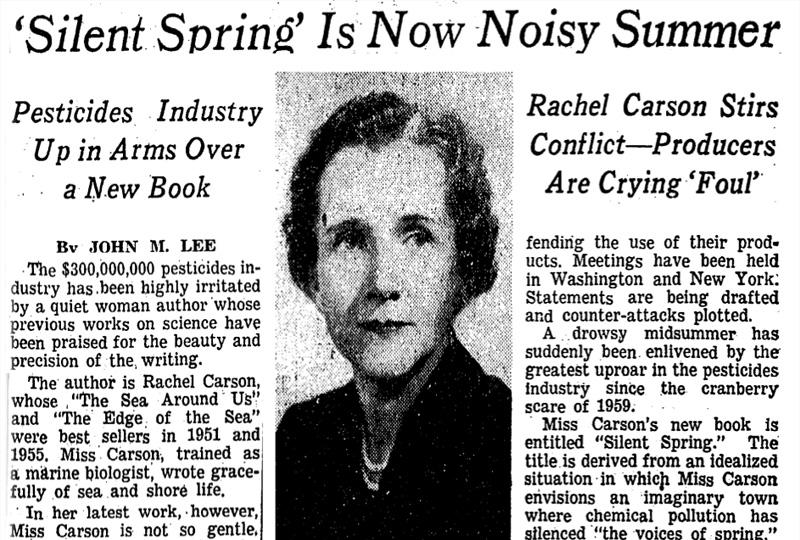
If you're on the H-Environment listserv, you probably saw the recent announcement about the Environment & Society Portal's exhibit on Rachel Carson's Silent Spring. It is a beautiful exhibit, and it inspired me to finally take some time to explore the rest of the portal. All I can say is: wow. This is an incredible resource for teaching. 

Even if environmental history is not one of your primary interests, please check this site out. Many connections with the history of science, medicine, and technology are visible on the site, making it easy to imagine how to integrate some environmental history into a history of science class, and vice versa. 
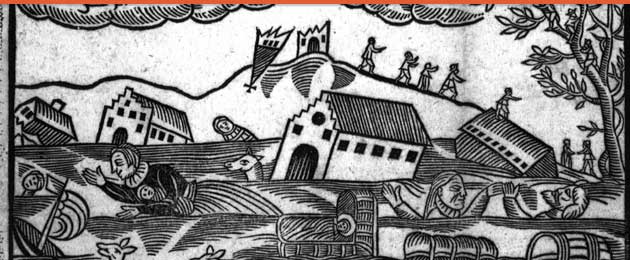
Woodcut from broadsheet: "The Great and Terrible Flood,"
January 1651, from the Portal's Multimedia Library for
environmental humanities

As more exhibits go up and more multimedia are added, I think it's going to be an exciting place to get ideas and materials for teaching. The three navigation tools––map viewer, timeline, and keyword explorer––make it easy to make new and interesting connections across time and space. Just looking at this site has made me daydream about designing my own global environmental history class. 

Anyway, I thought I would share this, since I'm not sure whether other HSM&T folks are aware of it. If you have found other websites useful for teaching (or ones you want to use in the future), or if you have specific ideas about how best to use a resource like this in the classroom, please share them in the comments! I'd love to have an ongoing discussion about this (happy hour, anyone?), but it would be nice to collect links here, as well. 
The Keyword Explorer links to articles
and multimedia throughout the Portal

Friday, May 11, 2012

From Jungle to Rainforest

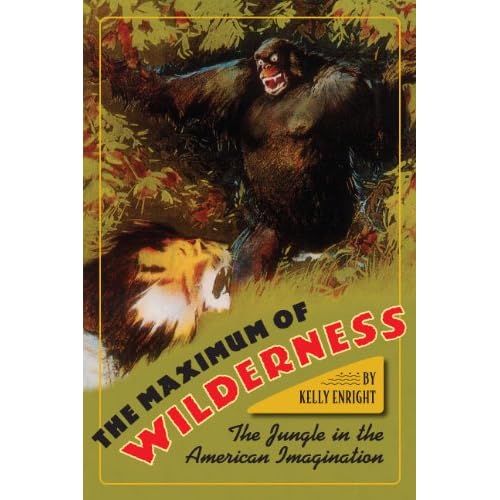
This is just a quick post to share my review of Kelly Enright's The Maximum of Wilderness: The Jungle in the American Imagination, which was just posted on H-Environment, H-Net Reviews.

Becoming an H-Net reviewer is easy, and I highly recommend it. (Academic journals have a variety of book review policies. It's best to check a journal's website and contact the book review editor if you have questions.) It took several months before I was contacted to write a review, so don't delay contacting the appropriate H-Net editor if you are interested.

Writing a book review can be a rewarding experience. It allows you to take part in current scholarly discussions more rapidly than through articles or books, yet more formally than through a blog like this one. In particular, because H-Net publishes online, there is a very quick turnaround time. I also find that reviewing a book is helpful for clarifying my own ideas about the field. Because you have a responsibility to give the book a very close reading and produce a fair account, the process helps you achieve a better sense of your own interests and approaches, in addition to a deep understanding of the work you review. Of course, you also get a free* book!


*Not counting the time you spend writing!

Tuesday, April 17, 2012

This Fine Place So Far From Home

I want to pass along a book recommendation from the Upper Midwest Regional Meeting of the American Academy of Religion, which I attended a couple of weeks ago in St. Paul. I've spoken before with a few classmates about the challenge of navigating the academy from a working-class background, and a colleague at AAR highly recommended this book, This Fine Place So Far from Home: Voices of Academics from the Working Class, edited by C. L. Barney Dews and Carolyn Leste Law:


I was struck by how many people at AAR identified as coming from the working class -- it was significantly more than I've ever noticed in a group of historians. All of us who identified ourselves seemed to be wrestling with the same issues of isolation and feeling out of place, which I had assumed I was feeling mostly because of being a gay man in the academy. Many of the issues of feeling at home in academia are in fact similar for working class and LGBTQ scholars.

Perhaps the most prominent issue the book addresses is the sense of being pulled between two worlds. For many of us from the working class, getting an advanced degree is a source of pride for our family, but also a source of estrangement, as we are pulled increasingly away from our origins. Also, it's not easy to explain the value of spending several years pursuing a doctorate, which is a puzzling and extravagant use of time to my family. My experience is that my two (or three) worlds hardly intersect at all, and so it takes a lot of energy to keep investing in such divergent relationships. I've heard bilingual friends speak about their experiences in this way, too.

Also addressed are the issues that probably most grad students wrestle with, of feeling an impostor in the world of the intellect. I notice how some grad students who grew up in academic families seem to move through the program with such familiarity -- not that it's easier for them intellectually or emotionally, but that they don't immediately assume that it's because they don't belong there. I think that the level of self-doubt has a different meaning for people who come from outside this sphere.

And one struggle that I know I've not hidden well is how awkwardly working-class behaviors and values fit into the academy. Not simply speaking plainly, but being blunter, even belligerent, using more profanity, and "playing the game" with less grace -- all contribute to the experience of being out of place.

I think that having a working-class background has motivated me to look at my research differently, and approach my teaching differently, but I'm looking forward to reading this book and being reminded that, despite our feelings of invisibility, that quite a few people who have to navigate that experience of being an outsider.  I also look forward to talking more with all of you about these dynamics.

Monday, April 16, 2012

Job Market Discussion

The History of Science brown bag for April 13th was an informal discussion on the job market, led by Alex Rudnick and Vicki Fama. We covered a lot of ground, but conversation focused primarily on the cover letter, teaching philosophy, the on-campus interview, and the value of post-docs. We mainly discussed issues that are pressing for students on or about to go on the market, but we hope to have future conversations about what one can do as a “younger” graduate student to prepare for the job search (Begin by reading this "The Professor Is In" post on the subject). Below is Meridith and Anna's summary of the sound advice doled out by our faculty:

Vicki started by noting that there is a lot of cynicism in the online dialogue about the job market. Certainly it's a tough market, but Mike Shank reminded us that it's been tight for historians of science for the last thirty years. So, what makes a strong application package? Mike was adamant (and other professors seemed to agree) that the cover letter is not only the first part of the application read, but can be a key means of weeding candidates out. It needs to be concise (no more than 2 pages), it should be addressed to the chair of the search committee, and it needs to be specific to the position that you're applying for. Tom Broman stressed the importance of being able to succinctly convey what your dissertation is about and show how your project can translate into future teaching and research. Judy Houck clarified that it's OK to have templates for cover letters; in fact, if you're applying to dozens of jobs (she applied to 100/year), you need to do this. For example, she created templates for positions in history of medicine, cultural history, and gender and women's studies. However, each letter should be tailored to the department in question, and should indicate how you fit the specific job, without being too defensive.

Anna Zeide asked about the types of positions one should apply to: is it wise to focus mainly on tenure-track (TT) jobs? Or is seeking transitional positions, like post-docs, a good strategy in some cases? Judy Houck said that it's typical for graduate students in the history of science and medicine to get post-docs before starting the TT search. She also pointed out that many of the alumni from our department who secured TT jobs right out of the program completed dissertations that were strongly relevant to fields beyond the history of science. One trend is that those who have done non-U.S. history have been more successful because of the far smaller pool of applicants. Mike Shank and Dayle DeLancey both felt post-docs are invaluable and are often the best strategy for everyone. Of course, there are different kinds of post-docs, but in general they can provide the opportunity for you to cut your teeth on teaching and work on publications. From the perspective of hiring committees, candidates with post-docs have been vetted by two institutions.

There seemed to be a fair amount of consensus that teaching philosophies are a fairly generic aspect of the package. They are normally not as tailored to a specific job as the cover letter, but it's good to mention courses offered in the department that you're prepared to teach. Judy Houck mentioned that when you're asked “How would you teach X,” people are often wondering what major works you would use in the class room, as opposed to your overall teaching style. The document itself should be broadly construed enough to demonstrate that you're flexible in your approach to teaching. Sue Lederer cautioned that one should not come off as someone who is SO committed to a certain kind of teaching philosophy that you appear unwilling to learn from future experience. She also said not to send the teaching philosophy unless an application explicitly asks for it. Andrew Stuhl pointed out that he aims to be a teacher first and foremost, so the teaching philosophy takes on greater importance as an element of the application package for students like him. He recommended the campus Writing Center's workshops on the teaching philosophy, and other elements of the application. As Anna Zeide nicely put it, it's an opportunity to express your voice and can be a “window into you.”

Finally, we discussed the on-campus interview. It's important to remember that the entire campus visit is an interview; dinners and causal conversations are just as crucial as talks or formal meetings. After all, the faculty is trying to decide whether or not you're someone that would make a good lifelong colleague. Generally one can expect to give a sample talk to the search committee and/or guest lecture an undergraduate course. You should treat these as chances to demonstrate your teaching abilities, not just discuss your research. Mike stressed that these are proxies for showing what kind of teacher you are: can you effectively teach the committee what your dissertation was about? Can you engage an audience? Judy noted that the interview process can be fun, as the focus is on you and your work, and that you're building connections with future colleagues, whether you end up in the position or not. However, you should also be prepared to ask questions of the faculty and make sure that you also show a sincere interest in your potential future work environment. Don't be too self-centered.

Micaela Sullivan-Fowler provided a piece of advice on the overall package: presentation matters. One should be make the effort to use high-quality paper, professional font, and pay attention to every detail.

Some final tips/ideas:
  • What to do now:
    • Read widely about the state of our profession: The Chronicle of Higher Education (available in the library or in the Medical History department, The Professor Is In, and other blogs.
    • Do your best to make wide connections, even outside your university, but make sure any reference letters you have are written by people who really know your work, and can offer specifics.
    • Teaching classes can help your research. It gives you a sense of where your work fits into a larger picture, and helps you transition your dissertation into a book.
    • Have a website. Update it!
  • Cover Letter:
    • Search committees are looking at large stacks of applications, and are hoping to weed some out. You have to make the initial cut, so make your cover letter opening as strong as possible. Avoid vagueness.
    • In your cover letter, describe how you will complement the current department, with specific reference to faculty.
    • Send your cover letter draft around to faculty and colleagues for proofreading/editing before sending out the official version. Mike Shank says he's happy to read!
  • Job Interviews
    • Job interviews aren't all intellectual; the committee also wants to get to know you and to see whether they want to have you as a colleague for the foreseeable future.
    • At a campus visit, be able to answer questions like, "What do you like to do in your spare time?" Your answer to this indicates whether your lifestyle would be a good fit for the city/town in which the university is located.
    • Search committee doesn't typically offer feedback; as it isn't politic to do so.
  • Fundamentally, the most important part of getting a job is what kind of scholar you are and how you package that. It's about the work (and some luck. and time.)
Other topics of interest that we didn't get to, that might be worth coming back to in future discussions or brownbags: when we should be publishing; how to talk to book editors; what kinds of job opportunities are out there beyond the R1 and small liberal arts colleges (re: the AHA conversations on "Plan B"); the possibility of setting up mock interviews in our department, like the History department does.

Friday, April 13, 2012

Getting the Most Out of Regional Conferences

One of the points raised in today’s excellent Brown Bag conversation about preparing for the job market was what we can do early in our program to prepare us – professionally and mentally – for a career in scholarship.

Of course, the first resource I want to share is The Professor Is In, a superlative blog about how to be sane and successful in the academic world, and which includes this especially helpful post: What To Do Now in Grad School.

The piece of advice I want to share is how valuable it is to attend small conferences and parlay these baby steps into giant professional steps. During back-to-back weekends, I attended Junto, the Midwest regional meeting of the History of Science Society, and the Upper Midwest regional meeting of the American Academy of Religion. Both were very welcoming to newcomers and were intentional about not intimidating those of us who were new to giving conference presentations. In fact, I urge you to get next year’s Junto on your calendar right now, and start saving those pennies to get yourself there:

Junto 2013: April 5-7 in Notre Dame, Indiana

(Incidentally, Wisconsin hosted the first Junto back in 1964, and it’s been several years since it met here, so I believe that it’s time we offered Madison hospitality for the 2014 Junto – who’s with me?)

Both Junto and the regional meeting of the AAR are intended to be low-key opportunities especially for newbies, so definitely take advantage of these conferences. They will make it much easier to imagine yourself presenting at the History of Science Society or even the American Historical Association, and then in your first job talks and teaching demonstrations. Take a stack of business cards to hand out -- after all, these are your future colleagues you're rubbing elbows with.

However, I would also like to offer some advice to inexperienced speakers about presenting effectively and making the most of these smaller, less-intimidating conferences.


1. Write in your speaking voice. Most importantly, remember that you are presenting to be understood. That sounds deceptively obvious, but quite a few of the presenters at both conferences did not do a good job of making themselves understood. First of all, recognize that there is a difference between your writing voice and your speaking voice – your audience is not going to have a copy of your text in front of them, and so they’re depending on you to be clear and easy to follow. Write a brilliant paper, by all means, but then go back through and rewrite it into your speaking voice. Cut down on the long-winded and complex-compound sentences, eliminate jargon and abbreviations, signpost your important points scrupulously, be lively and expressive, and use pauses to make yourself more understandable. I cannot emphasize this last point enough; I am convinced that the good response I got from the audience last week was primarily because they could actually understand what I was saying. In our nervousness, we might produce something like this information overload:

ThismorningI’mexaminingtheprovocationofarangeofAmericanresponsestothe1829textbookIntroductiontoGeologybyBenjaminSillimanSr.

which, to the audience, feels a bit like the famous scene from I Love Lucy:


Audience members need a moment to digest each chunk of information before the next one comes along, and if you don’t give it to them, they’re not following you. Better would be something like this:

This morning I’m examining (tiny pause) the provocation of a range of American responses (tiny pause) to the 1829 textbook (tiny pause) Introduction to Geology (tiny pause) by Benjamin Silliman Sr. (bigger pause)

Rehearse your talk several times, if possible, before the conference itself, and get some practice at using these pauses. If necessary, put a slash / at each place in your text / that you want to pause. Having sat through an entire day of twenty-minute presentations during which I believe no one actually paused to take a breath, I guarantee that your audience will thank you.

2. Respect the time limit. Seriously – no exceptions. One of the reasons you must rehearse your talk in advance is to make sure that you finish within the time limit with time to spare. DO NOT TRY TO FIT A 20-MINUTE TALK INTO 15 MINUTES – the only thing you will accomplish is to guarantee that your audience cannot follow you. Giving just the core points of your research and finishing with time for questions demonstrates not only that you respect your audience and the organizers, but also that you know your topic well enough to articulate what the very essence of it is. Being an experienced public speaker, I know that I can speak at 150 words per minute, but that 110 words per minute is much easier to understand. When the time limit is 20 minutes, I strive to write 17 minutes of speech, and then very deliberately make sure that I’m adding pauses for emphasis and clarity. Again, give yourself lots of chances to rehearse beforehand to be sure.

3. PowerPoint is a privilege, not a right. We’ve all seen examples of PowerPoint used badly, right? Cluttered slides, eye-searing neon text and ornate fonts, cutesy special effects – there are so many ways in which this can go wrong, but it also means that PowerPoint done well will stand out. First of all, recognize that every new slide distracts the audience from following what you’re saying, so don’t overwhelm them with unnecessary clip art or entertaining effects, and pause while they digest it and return their attention to you. I was so frustrated by a presenter last week, who apparently was trying to win a bet that he could use every single special effect offered by PowerPoint, that I could scarcely follow what he was saying. And don’t put any more text up there than absolutely necessary, but just the basic messages that you want to make sure the audience is getting – again, this is an exercise in demonstrating that you can articulate what the core of your research is. Lastly, remember that this visual medium is most effective when it’s contributing visual content – faces, maps, and landscapes -- that help to balance out all of the words the audience is already digesting.

4. Speak clearly, or speak not. Yes, public speaking is an anxious experience for us all. I preach almost weekly, and I still get nervous when I present at conferences. Everyone is sympathetic with you about how stressful this is, but that’s no excuse to become inaudible. Pitch your voice to the very back row, breathe so that you can project, enunciate clearly and speak expressively, and you will have already distinguished yourself from 80% of the other presenters. If you will be using a microphone, ask to test it during the break, and make sure that you can be heard. This is not Hogwarts, where the Sonorus spell will make sure that you’re audible – you have to actually speak into the microphone for it to work. And don’t bury your head in your manuscript text; look at your audience. I’m astounded at how many academics, who make a living by speaking to rooms full of people, are unable to speak to a room full of people. Make sure that you can be heard, or all your hard work will go unappreciated.

5. Your enthusiasm is contagious.  Yeah, this sounds like new-age thinking, I know, but seriously – if you convey your excitement for your topic and are explicit about why it should also be interesting to your audience, they’ll pick up on your enthusiasm. One of the most memorable talks I heard last week was about a history-of-technology analysis of the steampunk genre – maybe not the most serious topic, but it was fun and cheeky, and the presenter’s playfulness made it enjoyable for the audience as well. Sadly, the converse is also true – if you seem bored, frustrated, or confused by your topic, the audience will be too. Your posture, eye contact, changing pitch and cadence of your voice, and gestures all help to animate your talk, so get some practice at using them – alone at home, in front of a mirror, before a small group of trusted colleagues – and you’ll feel more natural using them at the conference.

Okay, these are just a few of the basic tips that came to mind during these two great conferences.  What suggestions can you add to this list?

Thursday, April 5, 2012

Teaching and the Job Market

Last week's History of Science brownbag was a teaching forum led by Alex Rudnick and Vicki Fama. This was one of a series of graduate-student-led brownbags, in which a general theme is set for open discussion, but no presentation or talk is given. It was definitely a success and the conversation actually went over time without anyone noticing.

We mainly discussed grading and leading sections; in fact, we didn't even make make it half way through the list of topics generated at the start. I mentioned a blog that some of us frequent, The Professor is In, which provides external advising to graduate students on or about to hit the job market. I also referenced this Chronicle article, which I promised to post. Dr. Karen Kelsky has some good, if tough, advice when it comes to teaching: 1) Be the sole instructor of at least one course by the time you graduate, b) minimize TA work, c) TAing is not a substitute for teaching your own course. This advice seems sound to me, but can be almost impossible to follow. The amount one TAs is often not a choice. Most grad students have to TA for at least a few semester during the course of their program as a means to earn tuition remission and support themselves, so the real question is how to manage time effectively while being the best teacher you can be?

Our conversation last week only scrapped the surface of this problem. People mentioned some techniques for reading/grading papers, and methods of involving students more fully in discussion, so that the burden of carrying a section does not fall solely on the TA's shoulders. I hope people will post some of their suggestions in the comments here!

Obviously, time management and balance is a perennial problem in academia that goes beyond TAing and teaching. The opportunity to talk openly and inclusively about these kinds of issues--with everyone from first year grad students to emeritus professors--is not only helpful, but special (for lack of a better word). Collegiality is one of the ways our department distinguishes itself and something I've come to deeply appreciate.

Both of the links I've shared here are also relevant to our April 13th brownbag on the job market: stay tuned...

Saturday, March 3, 2012

Just your browsing pleasure

To celebrate the idiosyncrasies of medical history, I'm reposting a letter held in the Otis Historical Archives of the National Museum of Health and Medicine in Maryland:

Curatorial Records: Numbered Correspondence 6826
Surgeon General's Office
U.S. Army Medical Museum and Library
Corner 7th and B Streets SW
Washington, July 6, 1903
Mr. Wm. Dant,
711 I St., SW,
Washington, D.C.

Dear Sir:
I am directed by the Surgeon General to express his thanks for the specimen of the double monster chicken received from you on this day. It will be added to the collection with a properly inscribed card.

Very respectfully,
Calvin DeWitt
Col. Asst. Surgeon General, U.S.A.
In charge of Museum & Library Division

Specimen No. 12691 Path. Sect.


I'm imagining a soul food feast, with hush puppies and collards to boot!

This is just one of the dozens of items I found on the museum's unofficial blog, A Repository for Bottled Monsters. There is a fun mix of posts to be found: documents and photographs from the museum's extensive collection, links to medical history articles and book reviews, and news on recent events at the museum.

Enjoy: http://bottledmonsters.blogspot.com/